Pennsylvania · NMLS #926762
Qualify a Pennsylvania rental on the rent it collects rather than the income you report. No tax returns, no employment verification, and title can sit in your LLC.
The short version. A DSCR loan qualifies an investment property on its own rent against its full payment, so your personal income never enters the file. Pennsylvania prices make these ratios clear more easily than most states, but the transfer tax and the school district millage both deserve a look first. Call or text me at 704-890-7168.
One calculation decides a DSCR loan. Rent divided by the full monthly payment. That is the test.
Full payment means principal, interest, taxes, insurance and any association dues, which the industry compresses into PITIA. A Pittsburgh duplex renting for $2,300 against a $1,750 payment runs about 1.31. A Philadelphia rowhome renting for $1,650 against a $1,620 payment runs about 1.02.
What is absent from the file is the point. No tax returns. No W-2s, no employment verification, no personal debt-to-income calculation, and no interest in the depreciation that made your last two returns look like a losing year, because the underwriter is measuring whether the building carries its own debt rather than whether you can carry it on top of everything else you already own.
The property qualifies. You do not. A credit check, a reserve check, and that is close to the whole of it.
| Ratio | Meaning | Typical treatment |
|---|---|---|
| 1.25 and up | Rent clears the payment with margin | Best pricing, most lenders interested |
| 1.00 to 1.25 | Carries itself with some room | The normal working band |
| Exactly 1.00 | Rent equals payment | Workable at many lenders |
| Below 1.00 | Does not cover itself | Possible with more down, priced accordingly |
Those bands drift with the market. Ask the lender what they want this month rather than trusting a table, including this one.
This is the part that makes Pennsylvania interesting for investors, and it is a straightforward consequence of price.
Philadelphia’s median sale price ran $294,805 in August 2026 and Pittsburgh’s $274,818. Both sit a long way below what comparable rents would suggest in most of the Southeast, which means the price-to-rent relationship here produces ratios that clear comfortably on properties that would struggle in Charlotte or Raleigh at the same rent. An investor priced out of a 1.0 ratio in a Sun Belt metro can frequently buy a 1.25 in Allegheny County.
Two cautions against getting carried away. Pennsylvania property tax rates vary enormously by school district, and a high-millage district can take a comfortable ratio down to a tight one by itself. And older housing stock, which is most of what you are buying in both cities, carries maintenance and insurance realities that never appear in a DSCR calculation but absolutely appear in your actual returns.
Run the specific address with the actual millage and a real insurance quote. Not the metro average. Two houses on opposite sides of a district line, identical in every other respect, can sit a full tenth of a point apart on the ratio purely because one of them pays a different school tax, and that is the kind of difference that decides whether a lender says yes.
The appraiser completes a comparable rent schedule, usually Form 1007, and most lenders then use the lower of that estimate and your signed lease. Buy a tenant-occupied property on a cheap legacy lease and that lease controls your ratio, no matter what the unit would fetch on the open market next spring.
Pennsylvania adds a wrinkle worth knowing. In parts of the state the rental comparables are genuinely thin, particularly in smaller boroughs and in neighborhoods where most housing is owner-occupied, and a 1007 built from weak comps can come back low simply because the appraiser had little to work with. That is a challengeable finding, not a verdict. Send real comparable listings and ask for reconsideration. It costs nothing. I have seen estimates move.
Pennsylvania has no statewide short-term rental license. The rules are municipal, and the three markets investors actually care about handle them in three incompatible ways.
Check the ordinance for the exact address, every time. Your lender will not do it, and a property that cannot legally operate nightly is a long-term rental whether you planned for that or not.
Short-stay income in Pennsylvania carries a 6 percent state sales tax, and local hotel taxes land on top of it. Philadelphia adds 8.5 percent. Pocono counties add their own lodging taxes.
Platforms collect and remit much of this automatically, which is convenient and also the reason many investors never think about it. The number that matters for your financing is what the property actually nets, and a lender underwriting short-term income will want to see documented operating history rather than a gross revenue projection off a listing site.
Three camps exist among lenders, and they do not advertise which one they belong to. Some will underwrite nightly projections from platform data. Some demand twelve months of history on that specific property. Some will only test it as a long-term rental regardless of your plans, which takes a Pocono cabin that performs beautifully at $280 a night and measures it against a $1,500 long-term comp. Ask before the appraisal is ordered. One question, asked early, saves the whole deal.
Most DSCR lenders will vest title in an entity with the members personally guaranteeing. Conventional financing generally will not, and the usual workaround, closing personally and quietly deeding into an LLC afterward, trips the due-on-sale clause in your own mortgage. Most servicers never check. It is still a bet with someone else’s rule.
Pennsylvania is easier than an attorney state here. There is no legal requirement for a lawyer at a residential closing, settlement runs through a title and settlement agent you choose, and an agent who handles investor files regularly will treat the operating agreement, the certificate of subsistence and the guarantee language as routine paperwork rather than a problem. Tell me at the start if entity vesting matters, because it narrows the lender list.
Whether an entity is right for you is a question for your attorney and your accountant. Not for me.
Pennsylvania charges 1 percent in state realty transfer tax, and local municipalities and school districts commonly add another 1 percent, so most of the state runs around 2 percent. Buyer and seller customarily split it, and both are jointly and severally liable for the whole amount under state law.
Philadelphia runs 4.278 percent combined. On a $250,000 rowhome that is $10,695 in transfer tax, and a customary split still asks the buyer for roughly $5,300 beyond the down payment.
For an investor that is a direct hit to first-year return, and on a DSCR file it also competes with the reserve requirement, since both come out of the same pile of cash. Model it first. Not after.
The 2026 conforming limit for a one unit property is $832,750 across Pennsylvania, except in Pike County, which belongs to the New York metropolitan area and carries $1,209,750.
That is roughly $377,000 of additional conforming room in a county that happens to sit in the middle of the Poconos short-term rental market. Worth knowing if you are looking at the larger lake properties around Milford.
I will run the ratio and tell you whether it clears before you spend a dollar on an appraisal. If it does not clear, I will tell you what would, which is usually a different down payment rather than a different property.
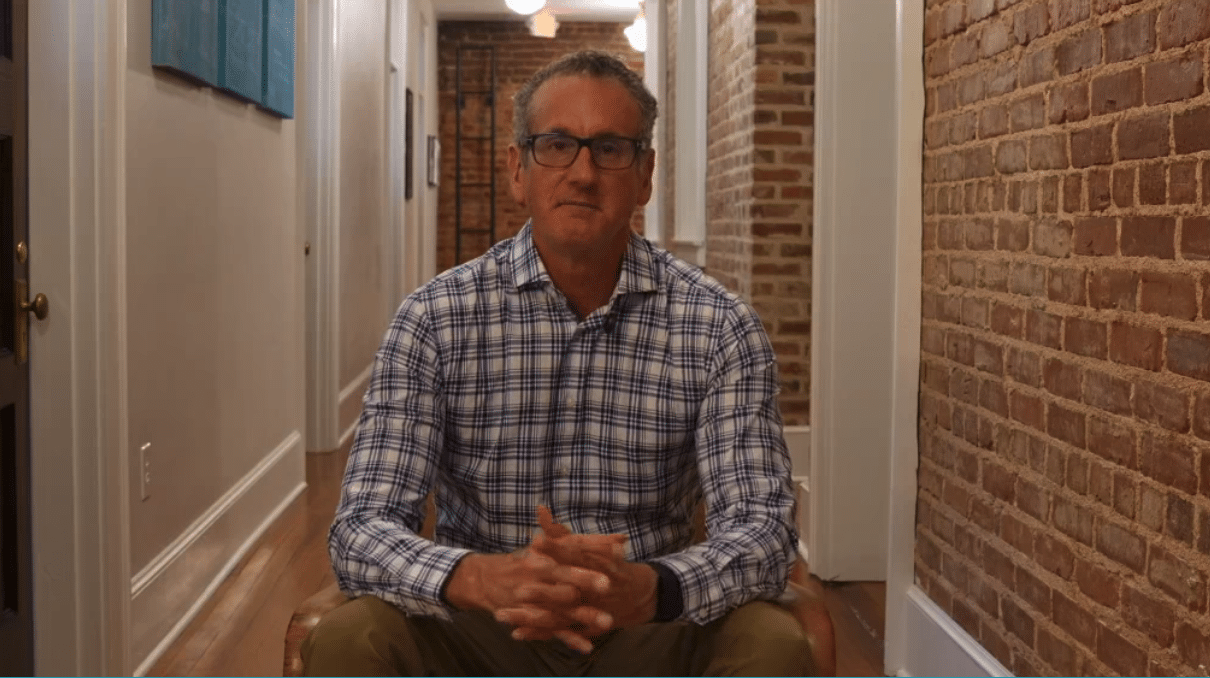
I am Scott Hastings, a mortgage broker with Arbor Financial Group, licensed in Pennsylvania and twelve other states. Investors are a large share of what I close, from single rowhomes in Philadelphia to small multifamily in Allegheny County and nightly rentals in the Poconos.
Licensed in 13 states including Pennsylvania. Individual NMLS ID 926762, verifiable on NMLS Consumer Access.
Mortgages by Scott has been accredited by the Better Business Bureau since 2015, and I have been originating mortgages for more than twenty years. WalletHub named me one of the best mortgage brokers in Charlotte for 2026.

No. A DSCR loan qualifies the property on its rent measured against its full payment, so there are no tax returns, no W-2s and no employment verification in the file. Credit, reserves and the appraisal still matter.
Price. Philadelphia and Pittsburgh median sale prices sit well below many comparable metros while rents hold up, so the price to rent relationship produces stronger ratios. Watch school district millage, which varies enormously and can tighten a ratio on its own.
Legality comes first. Philadelphia requires a Limited Lodging Operator License and a rental license, and a short-term rental that is not owner-occupied in a residential zone needs a zoning variance that is hard to obtain. Confirm the zoning position before you write the offer.
Most DSCR lenders allow entity vesting with a personal guarantee from the members. Pennsylvania has no attorney requirement at closing and settlement runs through a title agent you choose, so entity paperwork is routine when it is planned in advance.
About two percent combined in most of the state, split by custom between buyer and seller. Philadelphia is 4.278 percent combined. Both parties are jointly and severally liable for the full amount, so confirm the allocation in the agreement of sale.
$832,750 for a one unit property in every county except Pike County, which carries a high-cost limit of $1,209,750 because it falls in the New York metropolitan area.
Send me the address, the price, the down payment and the rent. I will run the ratio and tell you where it lands, with no credit pull and no application.
Text Scott: 704-890-7168 Call 704-890-7168Scott Hastings, individual NMLS #926762. Arbor Financial Group, 121 N Main St Ste 202, Mooresville, NC 28115. Phone and text 704-890-7168. Licensed to originate mortgage loans in Pennsylvania.
Equal Housing Opportunity. This page is general information about loan programs and is not a commitment to lend, a loan approval, or an offer of credit. Program availability, qualifying guidelines, credit score minimums, down payment and reserve requirements vary by lender and are subject to change. Nothing here is legal, tax or financial advice.
DSCR loan programs are non-QM products for non-owner-occupied investment property. Ratio thresholds, down payment and reserve requirements vary by lender and are subject to change. Short-term rental rules and tax rates described on this page are summaries as of 2026 and vary by municipality; confirm current requirements with the municipality, your settlement agent and your attorney.