Licensed in North Carolina · NMLS #926762
If your tax returns do not show what your business actually earns, a North Carolina bank reads that as not enough income. It is not. It is a documentation problem, and there are loan programs built for exactly this.
The short version. I am a mortgage broker based in Mooresville, licensed in North Carolina, working almost entirely with self-employed borrowers and real estate investors. If you write off enough that your adjusted gross income looks small, you can still buy or refinance using bank statements, 1099s, a profit and loss statement, your assets, or the rent a property collects. Call or text me at 704-890-7168.
A conventional lender does not qualify you on what your business brings in. It qualifies you on what survives your deductions, averaged over two years, with a list of add-backs that changes depending on whether the money lands on a Schedule C, a K-1 or a W-2 you write to yourself. Nobody explains this to business owners. Not once. So you spend the year doing what a competent operator is supposed to do, which is legally pushing that number down, and then you apply for a mortgage and discover that the number you worked all year to shrink is the only one the underwriter is permitted to look at.
Three versions of this walk through my door most weeks.
None of that means you cannot afford the house. It means the conventional calculation does not describe you, and a retail bank has no other lens to look through, so the file dies at the counter no matter what your business is actually doing. That is solvable. It is most of what I do.
North Carolina is unusual among fast-growing states in how simple its loan limit picture is. The 2026 conforming limit for a one unit property is $832,750, and it is the same figure in every county in the state. There is no high-cost designation anywhere: not on Lake Norman, not in Asheville, not in Biltmore Forest, not on the Outer Banks.
Compare that with Virginia, where the Washington suburbs carry a ceiling of $1,249,125 while the rest of the state sits at the baseline. Two regimes in one state. North Carolina has one. Here there is one number. It applies everywhere.
What that means in practice is that most North Carolina files are nowhere near the ceiling. Charlotte’s median sale price ran $429,995 in August 2026 and Raleigh’s ran $420,000, so the obstacle for the typical self-employed buyer is not loan size at all. It is documentation. Where the limit does bite is the top of the market: waterfront on Lake Norman, the Asheville and Highlands mountain markets, Figure Eight and Wrightsville, Pinehurst, the Outer Banks. Cross $832,750 in any of those and you are in jumbo or non-QM territory, which for a self-employed borrower usually means non-QM, because jumbo underwriting tends to be stricter about tax returns than conforming underwriting is.
North Carolina requires a licensed North Carolina attorney to handle the title opinion and the deed. A nonlawyer may conduct the signing and disburse funds, but the legal work belongs to an attorney, under G.S. 84-2.1 and State Bar Advisory Opinion 2002-1, and the choice of attorney is yours rather than the lender’s.
On a conventional purchase this is background noise. On a non-QM file it is a scheduling risk, because non-QM lenders issue closing instructions that a general practice real estate attorney may never have seen, and an attorney encountering an unfamiliar instruction set for the first time at eight in the morning on closing day will stop and ask questions rather than fund. I keep a short list of attorneys across the Charlotte, Triangle and Triad markets who have closed these before. There is no arrangement behind that list. I will send it to you for nothing.
Two tax points while we are here. The state excise tax on a deed is $1 per $500 of price, or any fraction of $500, and the seller pays it. Six counties, Camden, Chowan, Currituck, Dare, Pasquotank and Perquimans, add a local land transfer tax of up to 1 percent under local acts of the General Assembly. Those are seller costs, so they will not appear on your side of the settlement statement, but on the coast they are large enough to shape what a seller is willing to accept.
A bank has one set of guidelines. If your file does not fit them, the answer is no. The loan officer across the desk cannot change that however much they would like to, because the guidelines were written in another building by people who will never read your file and who answer to an investor rather than to you.
I am a broker, which means I place your file with whichever of my lenders handles your specific situation best, and the differences between them on a self-employed file are not small. One lender applies a 50 percent expense factor to a trades business. Another applies 30 percent. One requires two years of self-employment history, another will work with twelve months. One counts a retirement account at 70 percent, another excludes it entirely. None of that is published anywhere you can read it. You find out by asking, one lender at a time, which is the job.
That spread is the whole value of the broker channel for borrowers like you, and it is why the same file can come back approved at one lender and declined at another in the same week.
Four programs cover most of what I place in this state. Each has its own page with the actual mechanics, worked examples and the North Carolina specifics.
There are others I use less often: profit and loss programs where a CPA-prepared statement carries the file, and ordinary conventional and jumbo financing, which remains the cheapest money available whenever your returns can actually support it. I check that first every time. If conventional works for you, take it. I will say so.
| If this describes you | Start here |
|---|---|
| Operating business, many customers, healthy deposits | Bank statement |
| Nearly all income arrives on 1099 forms | 1099 program |
| Buying or refinancing a rental | DSCR |
| Retired, or sold a business, large balances | Asset based |
| Strong returns and two years of history | Conventional, and it is cheaper |
If two of those rows describe you, run both. The gap between them is routinely tens of thousands of dollars of buying power and it costs nothing to find out.
My office is at 121 N Main St in Mooresville, which puts me in the middle of the Lake Norman market and twenty five minutes up I-77 from uptown Charlotte. This is home. Not a service area I added to a list.
Lake Norman first: Mooresville, Davidson, Cornelius, Huntersville, Denver, Troutman and Sherrills Ford. Then Charlotte and the surrounding counties, Mecklenburg, Iredell, Cabarrus, Union, Gaston and Lincoln, which is where the volume is. The Triangle is the other center of gravity, Raleigh, Durham, Cary, Apex, Chapel Hill and Wake Forest, with a contractor and clinician population that these programs fit unusually well. I also work the Triad at Winston-Salem, Greensboro and High Point, the mountains at Asheville, Hendersonville, Brevard and Boone, the coast at Wilmington, Leland, Southport and the Brunswick beaches, and the Sandhills around Pinehurst and Southern Pines.
If your property is in North Carolina, I can originate on it. Being twenty five minutes from Charlotte rather than in an office park two time zones away is not a marketing line, it is the difference between an attorney relationship that already exists and one that has to be built during your contract period.
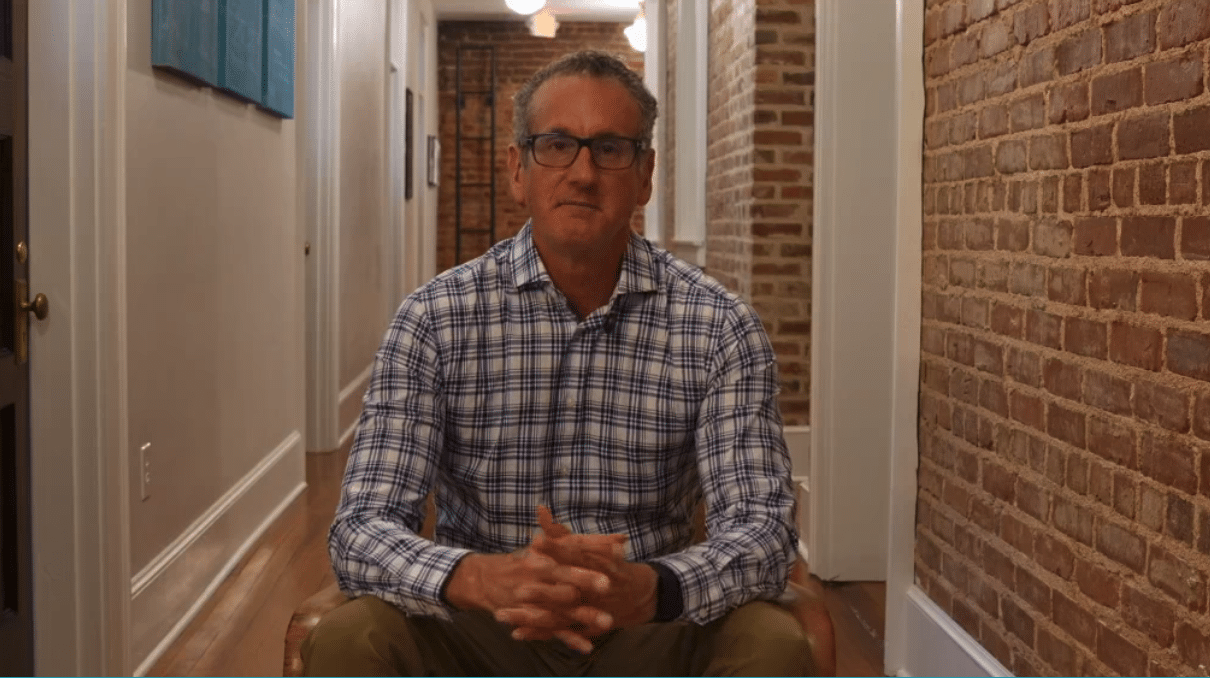
I am Scott Hastings, a mortgage broker with Arbor Financial Group, working out of 121 N Main St in Mooresville. I specialize in self-employed borrowers and real estate investors, which in practice means the files other lenders hand back.
I am licensed in 13 states including North Carolina, where I live and where most of my files close. My individual NMLS ID is 926762 and you can verify it on NMLS Consumer Access.
Mortgages by Scott has been accredited by the Better Business Bureau since 2015, and I have been originating mortgages for more than twenty years. WalletHub named me one of the best mortgage brokers in Charlotte for 2026.
If you want a straight answer about whether your income works before anyone pulls your credit, send me your situation and I will tell you.

Yes. Bank statement, 1099, profit and loss and asset based programs all qualify you without using your tax returns as the income calculation, and all of them are available on North Carolina properties for primary residences, second homes and investment property. They are not no documentation loans. The lender still has to establish that you can repay. What changes is which documents prove it.
It is $832,750 for a one unit property in every one of the state’s one hundred counties. North Carolina has no high-cost county designation, so there is nowhere in the state where the limit runs higher. Above that figure you are looking at jumbo or non-QM financing.
Yes. A licensed North Carolina attorney must handle the title opinion and the deed, under G.S. 84-2.1 and State Bar Advisory Opinion 2002-1. A nonlawyer can run the signing and disburse funds. You choose the attorney, and on a non-QM loan it is worth choosing one who has closed that type of file before.
Two years is the conventional standard, and a number of non-QM lenders will work with twelve to eighteen months when the business is established and the income is consistent. It varies by lender and by program, so being under two years is a reason to ask rather than a reason to wait.
Yes. DSCR loans are built specifically for investment property and qualify the property on its rent rather than qualifying you. Bank statement and asset based programs can also be used on investment property at most lenders. Short-term rental plans need checking against the local ordinance first, because Asheville, Raleigh and Charlotte each handle them differently.
The seller. North Carolina charges $1 per $500 of the sale price, or any fraction of $500, payable to the register of deeds before recording. Camden, Chowan, Currituck, Dare, Pasquotank and Perquimans counties add a local land transfer tax of up to 1 percent on top of that.
Send me your situation in a sentence or two. I will tell you which program fits, what it would qualify you for, and whether conventional financing would be cheaper. No application and no credit pull to get an answer.
Text Scott: 704-890-7168 Call 704-890-7168Scott Hastings, individual NMLS #926762. Arbor Financial Group, 121 N Main St Ste 202, Mooresville, NC 28115. Phone and text 704-890-7168. Licensed to originate mortgage loans in North Carolina.
Equal Housing Opportunity. This page is general information about loan programs and is not a commitment to lend, a loan approval, or an offer of credit. Program availability, qualifying guidelines, credit score minimums, down payment and reserve requirements vary by lender and are subject to change. Nothing here is legal, tax or financial advice.
Loan limits cited are the 2026 Federal Housing Finance Agency conforming limits. Market figures cited are third party data as of August 2026 and will change. Tax and closing requirements described on this page are summaries of North Carolina law as of 2026 and are not legal advice. Confirm current requirements with a North Carolina attorney.