North Carolina · NMLS #926762
Qualify a North Carolina rental on the rent it collects instead of the income you report. No tax returns, no employment verification, and title can sit in your LLC.
The short version. A DSCR loan qualifies an investment property on its own rent measured against its full payment, so your personal income never enters the file. It works across North Carolina for long-term rentals, and for short-term rentals where the local ordinance allows them. Call or text me at 704-890-7168.
A DSCR loan asks one question. Does the property pay for itself?
That is the test. Everything else is detail.
Take the rent. Divide it by the full monthly obligation, which means principal, interest, taxes, insurance and any homeowners association dues, shortened in the trade to PITIA. The result is the debt service coverage ratio. That is it. A duplex in Winston-Salem renting for $2,450 against a $2,050 payment runs about 1.20. A condo in Charlotte renting for $1,900 against a $2,100 payment runs about 0.90.
What the file does not contain is the part that matters to you. No tax returns, no W-2s, no verification of employment, no personal debt-to-income ratio, and no interest in the fact that your last two returns show a loss because of depreciation on the four doors you already own. The underwriter is grading the property’s ability to carry its own debt, not yours to carry it, and that distinction is the entire reason the product exists for people whose personal ratios were used up years ago.
The property qualifies. You do not. Credit and reserves get checked and that is close to the end of it.
| Ratio | What it describes | How lenders generally treat it |
|---|---|---|
| 1.25 and up | Rent clears the payment with margin | Best pricing, widest lender choice |
| 1.00 to 1.25 | Covers itself, some room | The normal working range |
| Exactly 1.00 | Rent equals the payment | Accepted by many lenders |
| Under 1.00 | The property does not cover itself | Allowed by some with more down, priced for it |
Those bands move. Read them as a shape, not a rulebook, because a lender that wanted 1.15 in March may want 1.00 in October and the only way to know is to ask that lender this week.
This catches nearly every first-time DSCR borrower. Every one.
The appraiser fills out a comparable rent schedule, usually Form 1007, estimating market rent from similar nearby rentals, and most lenders then use the lower of that estimate and your actual lease. The asymmetry is unforgiving in both directions: the excellent tenant paying above market does nothing for your ratio, while a cheap legacy lease signed by the previous owner three years ago will sink it outright.
So if you are buying a tenant-occupied property in Greensboro at $1,150 a month on a lease that runs another eight months, run your ratio on $1,150, not on the $1,400 you intend to charge next summer. And if the 1007 comes back below what the street is actually paying, that is contestable. Send the appraiser genuine comparable rentals. I have had rent estimates revised more than once and it costs nothing to try.
A vacant property is simpler. Market rent is the only figure in play.
Order the rent comps in your own head before the appraiser does. Pull four or five genuinely comparable listings, same submarket, same bedroom count, same condition, and if your expected rent is sitting well above all of them, the ratio you built your offer around is already in trouble and you have time to restructure the offer instead of discovering it on day eighteen of due diligence.
North Carolina has no statewide short-term rental license, so the rules are municipal, and they are not remotely consistent. If your plan is nightly rentals, the ordinance at the exact address decides whether the plan is legal before any lender decides whether it is financeable.
State law, at N.C. Gen. Stat. 160D-1207(c), generally bars local governments from imposing rental registration schemes outside narrow circumstances, which is part of why these regimes look so different from one another. A bill introduced in the 2025 session would have limited local authority further by barring outright prohibitions and night caps. It had not advanced as of early 2026, so plan around the ordinance that exists today rather than the one someone hopes is coming.
Legality is one hurdle. Underwriting is another. Lenders fall into three camps and they do not advertise which one they are in.
Some will underwrite short-term rental projections from platform market data. Some require twelve months of documented operating history on that specific property. Some will only underwrite it as a long-term rental no matter what you intend, which takes a Wilmington beach house that cashflows beautifully at $340 a night and tests it against a $2,300 long-term comparable, where it fails.
Find out which camp a lender sits in before the appraisal is ordered, because the sequence here is unforgiving: you pay for the appraisal, the appraisal comes back grading the property as a long-term rental, and the ratio you built your offer around stops existing while your due diligence clock keeps running. Ask first. It is one question.
North Carolina’s state excise tax on a deed is $1 per $500 of price, or any fraction of $500, and the seller pays it. On a $400,000 sale that is $800.
Camden, Chowan, Currituck, Dare, Pasquotank and Perquimans counties levy an additional local land transfer tax of up to 1 percent, authorized by local acts rather than general law. On that same $400,000 sale in Dare County the seller owes $4,000 to the county on top of the $800 in state stamps.
You will not see it on your closing statement. It is a seller cost. It absolutely hits what a seller will take, which is why Outer Banks negotiations behave differently from mainland ones and why an investor pricing a Corolla or Nags Head purchase off Charlotte intuition tends to be wrong.
Most DSCR lenders will close with title vested in an entity, normally an LLC, with the members signing a personal guarantee. Conventional financing generally will not, and the workaround investors reach for, closing in their own name and quietly deeding the property to an LLC afterward, trips the due-on-sale clause in their own deed of trust. Most servicers never look. It is still a bet. You are wagering that nobody on the other side of a thirty year note ever runs a title check, and the downside, an acceleration notice on a performing loan, is not proportional to the paperwork you saved.
North Carolina makes the entity route easier than some states, because your closing already runs through an attorney. The title opinion and deed must be handled by a licensed North Carolina attorney under G.S. 84-2.1 and State Bar Advisory Opinion 2002-1, and you choose that attorney, so an investor who picks one experienced with entity vesting gets the operating agreement, the certificate of existence and the guarantee language handled as routine rather than as a last-minute scramble.
Tell me at the start if an entity matters to you. It narrows which lenders fit, and it is painless when it is planned. Whether an entity is right for your situation is a question for your attorney and your CPA. Not for me.
Charlotte’s median sale price ran $429,995 in August 2026 and Raleigh’s ran $420,000, which puts a lot of investable inventory within reach of the same budget. The ratios do not behave the same way.
A $450,000 single family rental in a Charlotte neighborhood with strong rent and high taxes can run a tighter ratio than a $450,000 duplex in Hickory or Burlington where the price-to-rent relationship is kinder. Price is not the variable. Rent against full payment is, and property tax rates vary enough across North Carolina counties to move the ratio on their own.
Run the ratio on the specific address, with the actual county tax rate and the actual insurance quote, before you decide one market beats another. Not the county average. The address. Coastal insurance in particular will change an answer that looked settled. Get the quote early.
The 2026 conforming loan limit for a one unit property is $832,750 statewide. North Carolina has no high-cost county designation, not on Lake Norman, not in Asheville, not on the Outer Banks. Cross that number and you are in jumbo or non-QM regardless of where the property sits, which is worth knowing before you assume a coastal purchase gets special treatment. It does not. A waterfront house on the Intracoastal and a ranch in Kannapolis sit under the same ceiling, and the only thing that changes above it is which lenders will look at the file and what they charge for the privilege.
I will run the ratio and tell you whether it clears before you spend anything. If it does not clear, I will tell you what would make it clear, which is usually a different down payment rather than a different property.
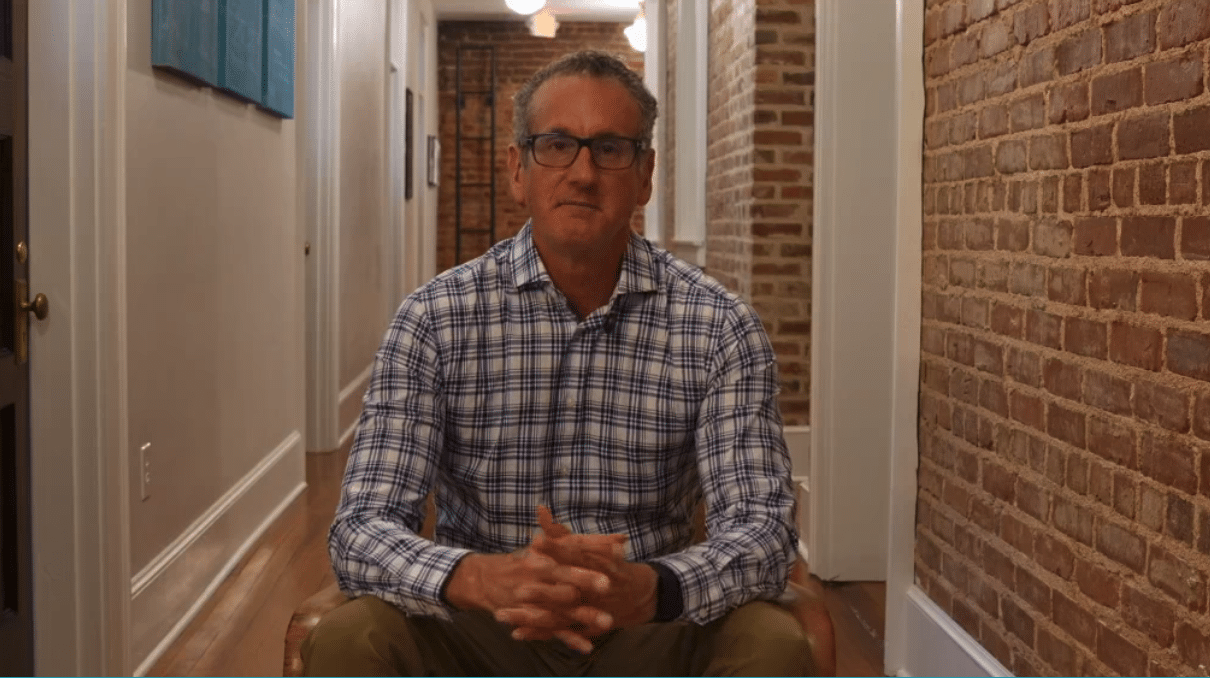
I am Scott Hastings, a mortgage broker with Arbor Financial Group, based at 121 N Main St in Mooresville. I work with investors across North Carolina, from Lake Norman and Charlotte to the Triangle, the Triad and the coast, and DSCR files make up a large share of what I close in a normal month.
Licensed in 13 states including North Carolina. Individual NMLS ID 926762, verifiable on NMLS Consumer Access.
Mortgages by Scott has been accredited by the Better Business Bureau since 2015, and I have been originating mortgages for more than twenty years. WalletHub named me one of the best mortgage brokers in Charlotte for 2026.

No. A DSCR loan qualifies the property on its rent against its full payment, so there are no tax returns, no W-2s and no employment verification in the file. Credit and reserves still matter, and the appraisal still has to support the value.
Most lenders use the lower of the two. The appraiser completes a comparable rent schedule, often Form 1007, and a below-market legacy lease will control your ratio even if the market would pay more. A low rent estimate can be contested with genuine comparable rentals.
Legality comes first. Asheville largely prohibits whole-home short-term rentals in residential districts and permits homestays only with the owner present. Financing follows the ordinance, so confirm what the address is actually allowed to do before you write the offer.
Most DSCR lenders allow entity vesting with a personal guarantee from the members. North Carolina closings already run through an attorney, which makes the entity documentation routine when it is planned in advance. Ask your attorney and CPA whether an entity suits your situation.
Many lenders work comfortably from 1.00 upward, and better pricing generally starts around 1.25. Some lenders will go below 1.00 with a larger down payment and pricing that reflects the risk. The thresholds vary by lender and move with the market.
Camden, Chowan, Currituck, Dare, Pasquotank and Perquimans levy a local land transfer tax of up to 1 percent, on top of the state excise tax of $1 per $500. The seller pays both, but it shapes what sellers will accept in those markets.
Send me the address, the price, the down payment and the rent. I will run the ratio and tell you where it lands, with no credit pull and no application.
Text Scott: 704-890-7168 Call 704-890-7168Scott Hastings, individual NMLS #926762. Arbor Financial Group, 121 N Main St Ste 202, Mooresville, NC 28115. Phone and text 704-890-7168. Licensed to originate mortgage loans in North Carolina.
Equal Housing Opportunity. This page is general information about loan programs and is not a commitment to lend, a loan approval, or an offer of credit. Program availability, qualifying guidelines, credit score minimums, down payment and reserve requirements vary by lender and are subject to change. Nothing here is legal, tax or financial advice.
DSCR loan programs are non-QM products intended for non-owner-occupied investment property. Ratio thresholds, down payment and reserve requirements vary by lender and are subject to change. Short-term rental rules described on this page are summaries of local ordinances as of early 2026 and are not legal advice. Confirm current requirements with the municipality and with your attorney.