Licensed in Pennsylvania · NMLS #926762
If your tax returns do not show what your business actually earns, a Pennsylvania bank reads that as not enough income. It is not. It is a documentation problem, and there are loan programs built for exactly this.
The short version. I am a mortgage broker licensed in Pennsylvania, working almost entirely with self-employed borrowers and real estate investors. If you write off enough that your adjusted gross income looks small, you can still buy or refinance using bank statements, 1099s, a profit and loss statement, your assets, or the rent a property collects. Call or text me at 704-890-7168.
A conventional lender does not qualify you on what your business takes in. It qualifies you on what is left after your deductions, averaged across two years, with a list of add-backs that shifts depending on whether the money lands on a Schedule C, a K-1 or a W-2 you cut yourself. Nobody sits a business owner down and explains that. Not once. So you spend a year doing exactly what a competent operator should, which is legally driving that number down, and then you apply for a mortgage and find that the number you worked all year to shrink is the only one the underwriter is permitted to see.
Here is what that looks like. I see some version of this file constantly.
A mechanical contractor outside Lancaster grosses $610,000. After trucks, tools, fuel, insurance, a shop lease and the subs he pays on bigger jobs, his Schedule C nets $118,000. He has been doing this for eleven years, he employs six people, and his accountant is doing exactly the job he is paid for. A retail bank qualifies the $118,000. It will not discuss the $610,000, because the guideline it works from does not permit the conversation.
Two variations on the same theme sit either side of him. One is the owner who went out alone fourteen months ago and is doing well, told to come back when he has two years of history. The other is the S corporation owner paying himself a modest W-2 salary and taking the rest in distributions, declined by an underwriter who read the salary line and stopped reading.
None of them is short of money. Each of them has been measured with an instrument built for someone who gets a pay stub. That is solvable. It is most of what I do.
If you are moving here from almost anywhere in the Southeast, this is the line that surprises you at the table.
Pennsylvania charges a 1 percent state realty transfer tax. Municipalities and school districts add their own on top, commonly another 1 percent, so most of the state lands around 2 percent all in. By long custom the buyer and seller split it down the middle, though the agreement of sale can allocate it however the parties agree, and state law makes both of them jointly and severally liable for the entire amount.
Philadelphia is in a category of its own. The city adds 3.278 percent on top of the state’s 1 percent, for 4.278 percent combined, which on an ordinary rowhome purchase produces a transfer tax bill larger than the entire closing cost package in most of the country.
| Where | Combined rate | On a $300,000 sale | Buyer’s customary half |
|---|---|---|---|
| Most of Pennsylvania | About 2 percent | About $6,000 | About $3,000 |
| Pittsburgh | 2 percent | $6,000 | $3,000 |
| Philadelphia | 4.278 percent | $12,834 | About $6,400 |
Compare North Carolina. There the whole transfer cost is $1 per $500 and the seller pays every cent of it. The difference is not academic on a non-QM file, because those loans carry reserve requirements, and reserves and transfer tax come out of the same pile of money. I have watched borrowers clear a down payment comfortably and then fail a reserve test because nobody told them about this line. Put it in the plan on day one, not at the walkthrough.
The 2026 conforming limit for a one unit property is $832,750 across Pennsylvania. One exception.
Pike County sits inside the New York metropolitan statistical area and carries a high-cost limit of $1,209,750. That is roughly $377,000 of extra conforming room for a buyer in Milford that a buyer forty minutes west in Wayne or Monroe County does not have. Plenty of loan officers do not know this. It occasionally turns what everyone assumed was a jumbo file back into a conforming one, which changes the rate, the down payment and the documentation all at once.
Everywhere else the ceiling is identical, whether you are buying on the Main Line, in Fox Chapel or in Erie. Cross it and you are in jumbo or non-QM. For a self-employed borrower that almost always means non-QM, because jumbo underwriting is stricter about tax returns than conforming underwriting, not looser, which is the opposite of what most people assume when they hear the word.
Pennsylvania has no law requiring a lawyer to buy a house. Settlement normally runs through a title and settlement agent the buyer chooses, and a great many transactions close with no attorney involved at any point.
That makes closings faster and cheaper than in an attorney state like North Carolina. It also means nobody in the room is paid to look out for you specifically. On a conventional purchase that is usually fine. On a non-QM file carrying lender conditions a general settlement agent has never seen, I would rather work with someone who has closed these before, and I keep a list across Philadelphia, the Lehigh Valley and Pittsburgh. No arrangement sits behind it. It costs you nothing.
Two things. The second is specific to this state.
The first is ordinary brokerage. A bank runs one guideline set; if your file does not fit it, the answer is no, and the person across the desk could not change that if they wanted to. I place the file with whichever of my lenders treats your particular situation best, and on self-employed files those differences are large. Expense factors for the same trade vary by twenty points between lenders. Some want two years of self-employment history and some work with twelve months. Some count a retirement account at seventy percent and some will not look at it. None of it is published anywhere.
The second is that non-QM lender coverage is genuinely uneven in Pennsylvania. Not every lender writing bank statement loans is licensed and active here, and among those that are, appetite varies by property type in ways that matter locally: Philadelphia rowhomes, older housing stock with knob and tube or a prior oil tank, two to four unit buildings in Allegheny County, and anything on well and septic in the northern tier. A lender that is excellent on a suburban Bucks County colonial can be useless on a Fishtown rowhome, and you cannot tell from the outside.
That is the job. Knowing which door to knock on, before you spend an appraisal fee finding out the hard way.
Four programs cover most of what I place here. Each has its own page, with the mechanics, a worked example and the Pennsylvania specifics set out in full rather than summarized into a brochure paragraph.
There are others I reach for less often, including profit and loss programs where a CPA-prepared statement carries the file. For the wider view of what is available here without tax returns, I keep a separate page on no income verification mortgages in Pennsylvania.
Ordinary conventional and jumbo financing is still the cheapest money in the market whenever your returns can genuinely support it. I check that first every time. If conventional works, take it. I will say so.
| If this describes you | Start here |
|---|---|
| A business with real deposits and a lot of customers | Bank statement |
| Almost everything you earn shows up on a form | 1099 program |
| The property is a rental, not where you sleep | DSCR |
| Big balances, small reported income | Asset based |
| Your returns genuinely support the payment | Conventional. It is cheaper and I will say so |
If two rows describe you, run both. The gap is routinely tens of thousands of dollars of buying power and it costs nothing to find out.
I am licensed across the state and originate statewide. The volume concentrates in a few places.
Philadelphia and the collar counties first: Montgomery, Bucks, Delaware and Chester. Then the Lehigh Valley at Allentown, Bethlehem and Easton, which the freight and warehousing corridors have turned into one of the fastest-changing markets in the state. Pittsburgh and Allegheny County are the other center of gravity. After that, Lancaster, York, Harrisburg, Reading, Scranton, Wilkes-Barre, State College, Erie and the Pocono counties.
The two big metros price far below what people expect. Philadelphia’s median sale price ran $294,805 in August 2026 and Pittsburgh’s $274,818, both a long way under the conforming ceiling. For most self-employed buyers in this state the obstacle has never once been the size of the loan. It is the tax return. That is a documentation problem, and documentation problems have solutions.
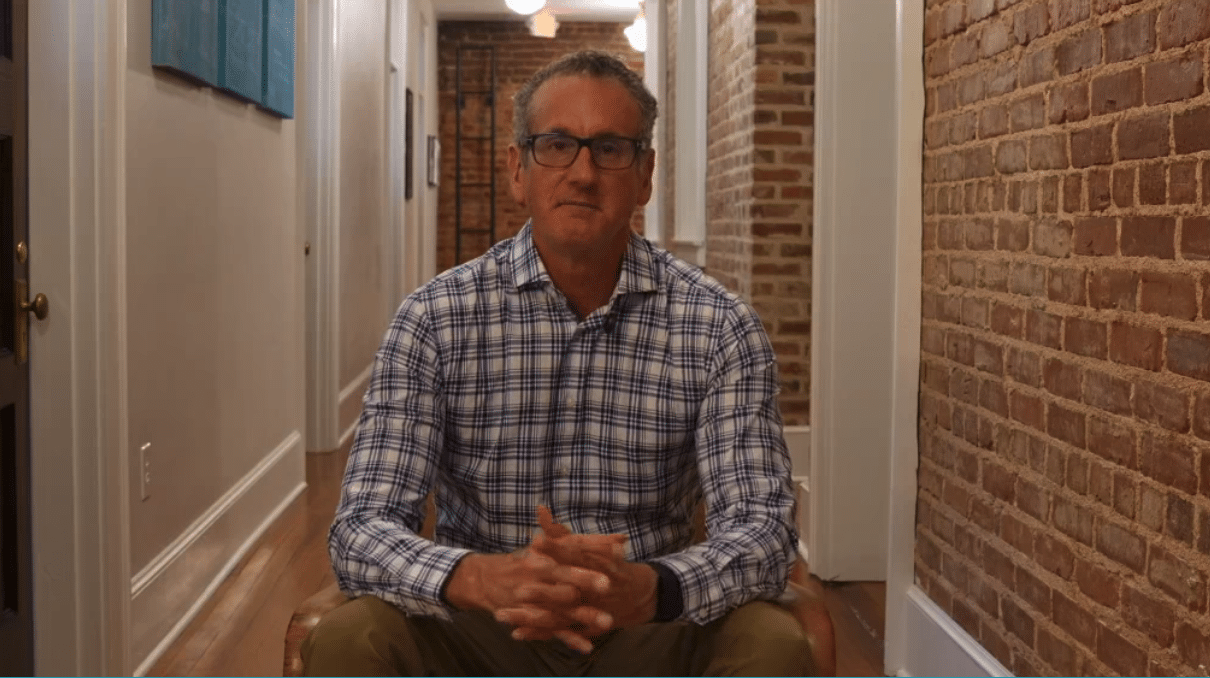
I am Scott Hastings, a mortgage broker with Arbor Financial Group. I specialize in self-employed borrowers and real estate investors, which in practice means the files other lenders hand back.
I am licensed in 13 states including Pennsylvania. My individual NMLS ID is 926762 and you can verify it on NMLS Consumer Access.
Mortgages by Scott has been accredited by the Better Business Bureau since 2015, and I have been originating mortgages for more than twenty years. WalletHub named me one of the best mortgage brokers in Charlotte for 2026.
If you want a straight answer about whether your income works before anyone pulls your credit, send me your situation and I will tell you.

Yes. Bank statement, 1099, profit and loss and asset based programs each replace the tax return with a different document, and all of them are available on Pennsylvania property for a primary home, a second home or a rental. None of them is a no documentation loan. The lender is still required to establish you can repay the money; it is the evidence that changes, not the standard.
It is $832,750 for a one unit property in every Pennsylvania county except Pike County, which falls inside the New York metropolitan area and carries a high-cost limit of $1,209,750. Above the applicable figure you are looking at jumbo or non-QM financing.
Both parties, by custom. The state charges 1 percent and local municipalities and school districts commonly add another 1 percent, with buyer and seller splitting it down the middle. Philadelphia is 4.278 percent combined. State law makes both parties jointly and severally liable for the full amount.
No. Pennsylvania has no law requiring a lawyer for a residential purchase. Settlement is usually handled by a title and settlement agent the buyer chooses. On a non-QM loan it is worth selecting an agent who has closed that type of file before.
Conventional guidelines generally look for two years. Several non-QM lenders will consider twelve to eighteen months where the business is established and the deposits are steady, and a few weigh industry experience before self-employment alongside it. Under two years is a reason to get a second opinion, not a reason to wait a year.
Yes. A DSCR loan is the usual route, because it tests the rent against the payment and leaves your personal income out of it entirely. Bank statement and asset based programs also work on investment property at most lenders. If the plan is nightly rather than monthly, settle the zoning question first: Philadelphia, Pittsburgh and the Pocono townships run three unrelated systems.
Send me your situation in a sentence or two. I will tell you which program fits, what it would qualify you for, and whether conventional financing would be cheaper. No application and no credit pull to get an answer.
Text Scott: 704-890-7168 Call 704-890-7168Scott Hastings, individual NMLS #926762. Arbor Financial Group, 121 N Main St Ste 202, Mooresville, NC 28115. Phone and text 704-890-7168. Licensed to originate mortgage loans in Pennsylvania.
Equal Housing Opportunity. This page is general information about loan programs and is not a commitment to lend, a loan approval, or an offer of credit. Program availability, qualifying guidelines, credit score minimums, down payment and reserve requirements vary by lender and are subject to change. Nothing here is legal, tax or financial advice.
Loan limits cited are the 2026 Federal Housing Finance Agency conforming limits. Market figures are third party data as of August 2026 and will change. Transfer tax rates are summaries as of 2026 and vary by municipality and school district; confirm the rate for a specific property with your settlement agent.