South Carolina
For self-employed borrowers and investors from Greenville to Charleston who keep getting told no by the bank.
Call or text 704-890-7168 Start a conversationIf you own a business in South Carolina and a bank has already turned you down, you probably heard some version of the same sentence. Your income does not support the loan. And you sat there thinking about the deposits you watched come in all year, and none of it added up.
So let me tell you what actually happened, because it usually is not about your business at all.
A conventional loan does not look at what your business earns. It looks at what is left on your tax return after every deduction you took. Equipment, mileage, the home office, the truck, depreciation on a rental. Every one of those lowered your taxable income, which is exactly what they were supposed to do.
Then you go to buy a house, and the underwriter reads that same return as the whole story of what you make. In other words, the better your CPA did their job, the worse you look on paper.
That is not a rule anybody can talk their way around. It is written into the guidelines. What you can change is which guidelines your file gets measured against.
People type a lot of different phrases for the same thing. Private mortgage lenders. Non-traditional lenders. Non-QM lenders. Alternative documentation. Most of the time they all mean one question: who will look at my income some other way?
The industry term is non-QM, which stands for non-qualified mortgage. That name sounds worse than it is. It does not mean subprime, it does not mean a hard money loan, and it does not mean you are a risky borrower. It means the loan sits outside the narrow federal box called a qualified mortgage, which is the box that requires tax-return income. Step outside that box and a lender is free to verify your income with deposits, or 1099s, or a profit and loss statement, or the rent an investment property collects.
Right. So the same borrower who does not qualify one way often qualifies comfortably the other way, on the same house, with the same business.
These are the programs I use most often for South Carolina borrowers. All of them are real mortgages on real terms, and all of them close through normal channels.
Here is roughly how a bank statement file goes. You send twelve or twenty-four months of statements. The lender adds up business deposits, strips out transfers and anything that is not revenue, then applies an expense factor to estimate what you actually keep. That result is your qualifying income.
The expense factor is where people get surprised, so it is worth understanding. A service business with almost no overhead gets treated differently than one carrying inventory and payroll. If your real margins are better than the default assumption, a CPA letter can sometimes improve the number. That single document has moved a lot of files from no to yes.
On cost, I will be straight with you. Non-QM prices higher than conventional. What matters is the comparison in front of you, which is usually not conventional versus non-QM. It is this loan versus no loan, or versus waiting two years and buying at whatever prices have done by then. And plenty of borrowers refinance into conventional later once their returns catch up to the business.
Credit and down payment move together on these programs. The more you put down and the stronger your score, the more programs open up and the less the pricing costs you in points. Less down or thinner credit rarely means no. It usually means a different program or a higher cost.
I am licensed across the whole state, and the work tends to cluster in a few places:
That last one is worth a note. My office is in Mooresville, on the North Carolina side of Lake Norman, which puts me about an hour from Fort Mill. A lot of my South Carolina clients live in York County and work in Charlotte, and I deal with both sides of that state line constantly. If you are buying in South Carolina and working in North Carolina, or the reverse, that is ordinary Tuesday work here rather than something unusual.
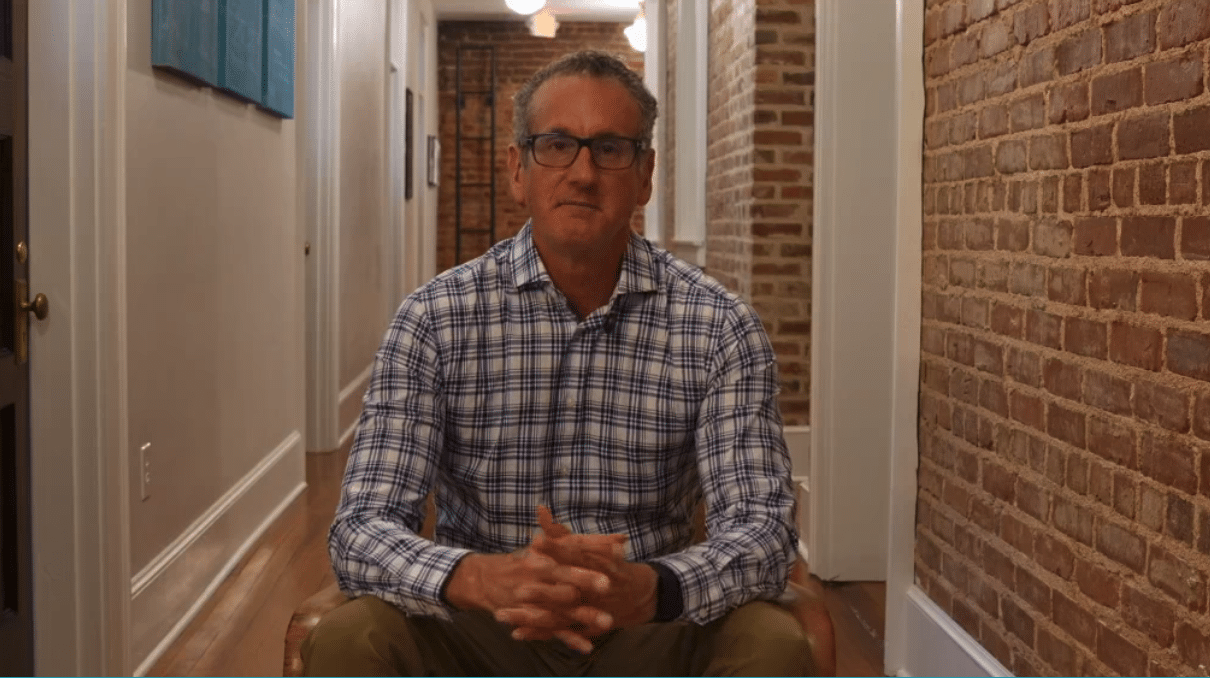
I am Scott Hastings, NMLS #926762. I have spent more than twenty years doing this, and most of that time has been with self-employed borrowers and real estate investors, which is not where most loan officers want to spend their day. Complicated files are the whole job here rather than the exception.
I work as a broker under Arbor Financial Group, so I am not selling one lender’s shelf. If your file fits better somewhere else, I send it somewhere else. That is the entire advantage of a broker and it is the reason a file that got declined at a bank often closes without drama.
Licensed in 13 states: North Carolina, South Carolina, Florida, Georgia, Virginia, Arkansas, Indiana, Maryland, Missouri, Montana, New Hampshire, Nevada and Pennsylvania.
Non-QM programs mostly come from wholesale lenders who do not have retail branches, which is why you cannot walk into one. You reach them through a licensed mortgage broker. As a broker I am approved with a range of them, so instead of applying to one lender and hoping, your file goes to whichever one fits your income documentation and your credit profile best.
No, and this is worth getting clear. Hard money is short term, asset based, expensive, and usually for investors doing a project. Non-QM is a normal thirty-year mortgage on a home you live in or rent out. The only unusual thing about it is how your income gets documented.
Yes. That is the entire point of the program. Bank statement and 1099 loans do not use tax returns to calculate income. You will still document who you are and that the business exists, typically with a business license or formation documents and a CPA letter, but the returns themselves stay out of the income calculation.
Two years is the standard most programs want, and there are lenders who will work with less when the history and the reserves support it. If you left a W-2 job for the same line of work you were already in, that argument gets easier. Worth a phone call before you assume you are too early.
Yes, and DSCR is usually the right tool. The property qualifies on its rent rather than on your personal income. Short-term rental income can be used on many DSCR programs, though the documentation requirements differ from a long-term lease, so tell me up front which one you are planning.
Usually, yes. Most declines I see were not a judgment on the borrower. They were a bank running a self-employed file through the only program it had. A decline at one lender tells you very little about what a different program would do with the same file, and it costs you nothing to have someone look.
You can verify my license on NMLS Consumer Access, and South Carolina mortgage broker licensing is administered by the South Carolina Department of Consumer Affairs.
Find out what your file actually looks like
Tell me what you do for a living and roughly what you are trying to buy, and I will tell you which program measures your income the way your business actually works. Call or text 704-890-7168. No application needed to have the conversation, and no pressure if the timing is not right yet.
Scott Hastings, NMLS #926762. Mortgages by Scott, a division of Arbor Financial Group, NMLS #236669. 121 N Main St Ste 202, Mooresville NC 28115. Equal Housing Opportunity. All loans subject to credit and property approval. This page is general information, not a commitment to lend or an offer of credit, and no rate, term or approval is promised.