Pennsylvania · NMLS #926762
Qualify on what your business deposits rather than what survives your deductions. Twelve or twenty four months of statements, no tax returns, and an expense factor you are allowed to argue with.
The short version. A bank statement loan qualifies you on deposits into your business account, minus an expense factor, divided by the months reviewed. No tax returns. In Pennsylvania, budget for the transfer tax as well, because here the buyer usually pays half of it. Call or text me at 704-890-7168.
Three numbers decide everything on one of these files.
Total the eligible deposits into your business account across twelve or twenty-four months. Apply an expense factor, which is the lender’s assumption about how much of that money went back into the business rather than into your pocket. Divide by the number of months reviewed. The result is your income for underwriting purposes, and nothing else about your tax return enters the conversation.
An electrical contractor outside Allentown depositing $44,000 a month at a 45 percent factor qualifies at $24,200. The same deposits at a 30 percent factor qualify at $30,800. One assumption, $6,600 a month of buying power.
That gap is where the work is.
Lenders carry a default factor per business type. A consultancy with a laptop and a phone sits low. A paving company buying asphalt and running a crew sits high. The default is a guess made about an industry, not a measurement made of your company, and a borrower who never questions it is accepting someone else’s arithmetic about their own business.
A letter from your CPA stating your real expense ratio will override the default at most lenders, provided it is signed, on letterhead, and specific about the period. A signed profit and loss statement supports it.
This matters more in Pennsylvania than people expect, because so much of the self-employed economy here is trades and contracting, and trades carry the highest default factors in the book. A Lancaster County framer who subcontracts labor and bills materials separately may run a genuine expense ratio half what the lender assumes for construction.
Ask what factor applies before you send anything. It is a question, not a confrontation.
| Deposit | Treatment | Reason |
|---|---|---|
| Customer payments, card batches, checks | Counted | Ordinary revenue |
| Transfers from your own other accounts | Stripped | The same dollar counted twice |
| Loan proceeds, draws on a line of credit | Stripped | Borrowed money is not earned money |
| Tax refunds, insurance payouts, grants | Stripped | Not recurring |
| Cash with no invoice behind it | Questioned, often stripped | Source cannot be verified |
| A deposit far outside your usual range | Questioned, allowed with documentation | Outliers get flagged automatically |
One account for the business. One account for you. If your personal and business money share a checking account, an underwriter has to guess at every ambiguous line, and guesses go against you rather than for you. If you are mixed today, open the clean account anyway. Twelve months from now it becomes a twelve-month statement loan with nothing to argue about.
A cabinet shop owner, nine years in business, buying at $465,000 with 15 percent down.
His last two returns showed a combined adjusted gross income that would have supported roughly half that purchase. The returns were accurate. They described his tax position, not his earnings.
Both are available nearly everywhere. Twenty-four months is standard and twelve usually prices slightly higher, since the lender is working from half the record.
Seasonality decides this, and Pennsylvania has real seasons. A paving contractor, a roofer, a landscaper or a pool company does the overwhelming majority of its billing between April and October, so a twelve-month window ending in March hands the underwriter two dead winters and one summer, while twenty-four months averages two of each and produces a materially higher number. For a year-round business with a strong recent year, twelve can win.
Add up both windows before you choose. Ten minutes, and it frequently changes the answer.
Almost never the income. The declines cluster:
Most lenders will read personal bank statements instead of business ones. The trade is that they typically count only the share of each deposit your ownership percentage justifies, and they often apply a different factor, so a half owner depositing revenue personally can see half of it counted before any expense factor is applied.
Sole owner with a clean business account: use business statements. Messy business account, tidy personal account: run both and compare. I have watched the personal version add thirty percent to a qualifying income and I have watched it cut one in half. It depends entirely on how the money actually moves, which is why guessing is a bad idea and adding it up is a good one.
This is the item that surprises people moving here, and it is worth understanding before you set a down payment.
Pennsylvania charges a 1 percent state realty transfer tax. Municipalities and school districts add their own on top, commonly another 1 percent, so most of the state runs about 2 percent all in. By custom the buyer and seller split it down the middle, though the agreement of sale can allocate it differently and state law makes both parties jointly and severally liable for the whole amount.
Philadelphia is the outlier, and not by a little. The city adds 3.278 percent to the state’s 1 percent for a combined 4.278 percent. On a $300,000 rowhome that is $12,834 in transfer tax, and a customary split still leaves the buyer finding roughly $6,400 on top of the down payment and ordinary closing costs.
| Where | Combined transfer tax | On a $300,000 sale |
|---|---|---|
| Most of Pennsylvania | About 2 percent | About $6,000, customarily split |
| Pittsburgh | 2 percent | $6,000, customarily split |
| Philadelphia | 4.278 percent | $12,834, customarily split |
Compare that with North Carolina, where the entire transfer cost is $1 per $500 and the seller pays all of it. A self-employed borrower who budgeted a Pennsylvania purchase using out-of-state intuition can arrive at the table several thousand dollars short, and on a non-QM file where reserves are already part of the approval, that is not a rounding error. Build it into the plan on day one.
Pennsylvania does not require a lawyer to buy a house. Settlement is normally run by a title and settlement agent the buyer chooses, and plenty of transactions close with no attorney involved at any point.
That makes closings here faster and cheaper than in an attorney state. It also means nobody in the room is paid to look out for you specifically. On a straightforward conventional purchase that is usually fine. On a non-QM file with lender conditions a general settlement agent has not seen before, I would rather work with an agent who has closed bank statement loans, and I keep a list across the Philadelphia, Lehigh Valley and Pittsburgh markets. No arrangement behind it.
The 2026 conforming limit for a one unit property is $832,750 across Pennsylvania, with exactly one exception. Pike County sits in the New York metropolitan statistical area and carries a high-cost limit of $1,209,750.
If you are buying in Milford, Matamoros or anywhere else in Pike, you have roughly $377,000 more conforming room than a buyer forty minutes west in Wayne or Monroe County. Almost nobody knows this, including plenty of loan officers. It is the single most useful piece of Pennsylvania trivia in my business, and it occasionally turns a jumbo file back into a conforming one.
I am licensed across Pennsylvania and originate statewide. The concentrations are Philadelphia and the collar counties of Montgomery, Bucks, Delaware and Chester; the Lehigh Valley at Allentown, Bethlehem and Easton; Pittsburgh and Allegheny County; and then Lancaster, Harrisburg, York, Reading, Scranton, Wilkes-Barre, Erie and the Pocono counties.
The two big markets price very differently. Philadelphia’s median sale price ran $294,805 in August 2026 and Pittsburgh’s $274,818, both well under the conforming ceiling, which means that for most Pennsylvania self-employed buyers the obstacle has never been loan size. It is the tax return.
If you want the wider view of what is available without tax returns, I keep a Pennsylvania overview at no income verification mortgages in Pennsylvania.
I will come back with a qualifying income and the price range it supports, including the transfer tax in the cash to close so the number is real. No application and no credit pull to get there.
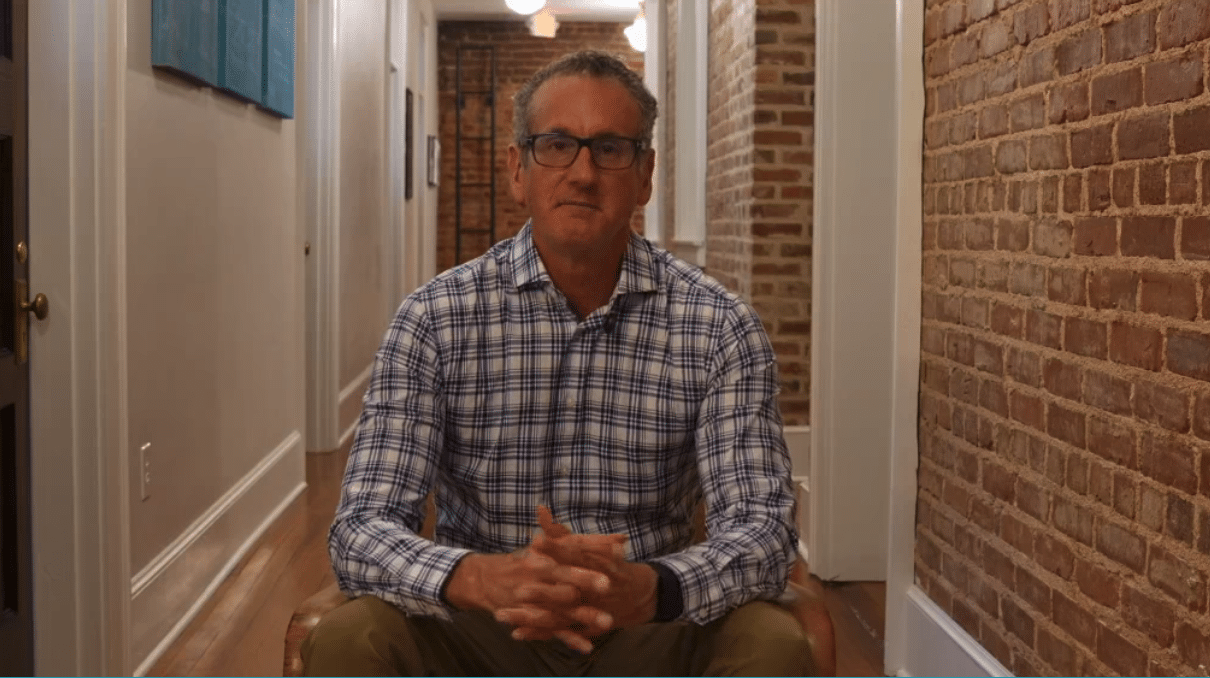
I am Scott Hastings, a mortgage broker with Arbor Financial Group, licensed in Pennsylvania and twelve other states. Self-employed borrowers and investors are effectively my entire book, which means bank statement files are the ordinary week here rather than an exception somebody has to look up.
Licensed in 13 states including Pennsylvania. Individual NMLS ID 926762, verifiable on NMLS Consumer Access.
Mortgages by Scott has been accredited by the Better Business Bureau since 2015, and I have been originating mortgages for more than twenty years. WalletHub named me one of the best mortgage brokers in Charlotte for 2026.

Yes. A bank statement loan qualifies you on deposits into your business account over twelve or twenty-four months, reduced by an expense factor, with no tax returns used as the income calculation. It is not a no documentation loan, and the lender still has to establish that you can repay.
One percent to the state, plus a local rate that is commonly another one percent, so about two percent in most of the state. Philadelphia is far higher at 4.278 percent combined. Buyer and seller customarily split it, and both are jointly and severally liable for the full amount.
No. Pennsylvania has no law requiring an attorney for a residential purchase. Settlement is usually handled by a title and settlement agent the buyer selects. On a non-QM loan it helps to choose an agent who has closed that type of file before.
It is $832,750 for a one unit property in every county except Pike County, which is part of the New York metropolitan area and carries a high-cost limit of $1,209,750. Above the applicable figure you are in jumbo or non-QM territory.
Compare both before deciding. Twelve months helps when your recent year is stronger, but for a seasonal Pennsylvania business a window ending in late winter can capture your slowest months and badly understate you. Twenty-four months averages the seasons out.
Often yes. Lenders start from a default by business type, and a signed letter from your CPA stating your actual expense ratio will override it at most of them. A signed profit and loss statement supports the case. Ask what factor applies before submitting anything.
Send me two or three business bank statements and a line about what you do. I will give you a real qualifying income, the price range it supports, and the transfer tax built into the cash to close.
Text Scott: 704-890-7168 Call 704-890-7168Scott Hastings, individual NMLS #926762. Arbor Financial Group, 121 N Main St Ste 202, Mooresville, NC 28115. Phone and text 704-890-7168. Licensed to originate mortgage loans in Pennsylvania.
Equal Housing Opportunity. This page is general information about loan programs and is not a commitment to lend, a loan approval, or an offer of credit. Program availability, qualifying guidelines, credit score minimums, down payment and reserve requirements vary by lender and are subject to change. Nothing here is legal, tax or financial advice.
Bank statement loan programs are non-QM products. Qualifying income is determined by each lender’s own deposit analysis and expense factor, both of which vary by lender and by business type. Transfer tax rates described on this page are summaries as of 2026 and vary by municipality and school district; confirm the rate for the specific property with your settlement agent. Figures in examples are illustrative and are not quotes or offers.