State availability
Six states block the loan outright. A few more depend on the lender. Here is the map, and the reason behind it.
You found out this loan exists. No income on the application, no tax returns, no debt-to-income calculation. Then you got a little further and someone told you it is not available where you live, and nobody explained why.
That is a real thing, and it is worth understanding, because it is not the lender being difficult. It is your state.
A true no income verification mortgage cannot be done in these six:
This is not the policy of one lender. Every lender I have seen operating in this space excludes the same six, and they all give the same reason. I will explain that reason in a second, because once you understand it you understand the whole product.
I am licensed in Maryland, Nevada and Pennsylvania. I still cannot do this particular loan in any of them. That is worth saying plainly, because a broker telling you what he cannot do is more useful than one who takes your application and figures it out later.
After 2008, Congress passed the ability-to-repay rule. In plain terms it says a lender has to document that you can actually afford the payment. Tax returns, W2s, pay stubs, bank statements, something. That rule is why the old no-doc loan disappeared.
There is one carve-out. A lender that is certified by the U.S. Treasury as a Community Development Financial Institution, a CDFI, is exempt from the ability-to-repay rule on the loans it originates. The exemption exists because CDFIs are chartered to serve people the normal system leaves out, and a rule that measures you by your tax return leaves out a lot of self-employed people.
So the loan is not a loophole and it is not a throwback. It is a federal exemption used by lenders who hold a federal certification for exactly this purpose. That is the legal basis, and it is the entire reason this product exists.
Here is where the states come in. Ability to repay is federal, but most states wrote their own version into state law, and a handful of them did not include the CDFI carve-out. In those states the federal exemption does not get you out from under the state requirement. A CDFI lender operating there would be compliant federally and non-compliant locally, so they do not lend there at all.
In other words, the loan is legal. It is just that six states did not adopt the piece of the law that makes it possible.
Worth being clear about, because people mix these up. The state problem above applies to loans where no income is documented at all. Every other program I use documents income, just not with tax returns.
A bank statement loan satisfies ability to repay the ordinary way. It totals your deposits and applies an expense factor to reach a qualifying income figure. Same with 1099 loans, P&L loans, asset-based qualifying and DSCR loans. Those are non-QM, but they are not exempt from anything. They comply.
Which means the six-state problem does not touch them. If you are in Pennsylvania or Maryland and you own a business, you have options. You just do not have this one.
Past those six, availability gets patchy in the Northeast. Connecticut, Delaware, Massachusetts, New Hampshire, New Jersey, New York, Rhode Island and Vermont are open on some of these programs and closed on others.
The reasons vary and they are not always about the law. Sometimes it is state licensing. Sometimes it is a state high-cost lending rule that the loan cannot clear. Sometimes a lender simply decided a state was not worth the compliance overhead. West Virginia is closed on at least one program for its own reasons.
The practical effect is that a broker approved with one lender will tell you no and a broker approved with three will tell you yes, in the same state, on the same file. That is not a difference in your qualifications. It is a difference in shelf space.
Puerto Rico, Guam and the U.S. Virgin Islands are out across the board. So are the Hawaii lava zones, which is a property risk rule rather than a state rule.
North Carolina allows these loans. The catch is the loan amount, and this one is mine to explain because I have run into it.
North Carolina has a points-and-fees test that caps what can be charged on a mortgage as a percentage of the loan. On a large loan that cap is not a problem. On a small loan the same dollar amount of fees becomes a much bigger percentage, and the loan fails the test.
These programs cost more to originate than a conventional loan. They are manually underwritten, they require a full appraisal, a third-party fraud report and in most cases a second appraisal above a certain size. That work does not get cheaper because the loan is smaller.
So for practical purposes there is a $300,000 minimum loan amount on this program in North Carolina. Most lenders in this space write that floor directly into their guidelines. I have closed one below it. It cleared the fee test and it funded, and I made almost nothing on it, because clearing the test meant cutting what I could charge down to nearly zero.
I would rather tell you that than pretend the floor is arbitrary. If you are buying in North Carolina and the loan is under $300,000, plan on a different program. A bank statement loan is usually the better answer at that size anyway.
None of that is a reason to give up on a state. It is a reason to have the conversation before you write an offer.
I am licensed in thirteen states. For this specific program that breaks down as:
For the three in that last group, I can still help. Every other non-QM program is open there, and those are the ones most self-employed borrowers should be looking at first regardless.
One more thing people get backwards. What matters is where the property is, not where you live. If you live in Pennsylvania and you are buying in Florida, that is a Florida loan and it works. If you live in Florida and you are buying in Pennsylvania, it does not.
Not sure which list your state is on? Text me the state and the loan amount and I will tell you before you send a single document.
I am approved with three lenders that run a no income program, and I have all three sets of guidelines in front of me. Those documents are written for brokers and are not distributed to the public, so I am not going to reproduce anyone else’s grid here. What I can tell you is where the three of them land, because the spread between them is the part that actually decides your file.
That last group of items is the reason to use a broker rather than shop this yourself, and it is not a sales line. A declined file at one of these lenders is frequently an approved file at another one, purely because of which shelf it landed on.
Income is not documented. Everything else is, and more of it than on a conventional loan. All three require a signed IRS Form 4506-C and Form 8821, a full interior appraisal, a third-party fraud report and an OFAC screen. A second appraisal is required above a certain loan size. Housing history has to be clean for twelve months.
The 4506-C is the one that surprises people. That is the form authorizing a lender to pull your tax transcripts. It is required for identity and fraud verification even though the income on it never gets used to qualify you. So no, this is not 2006 coming back.
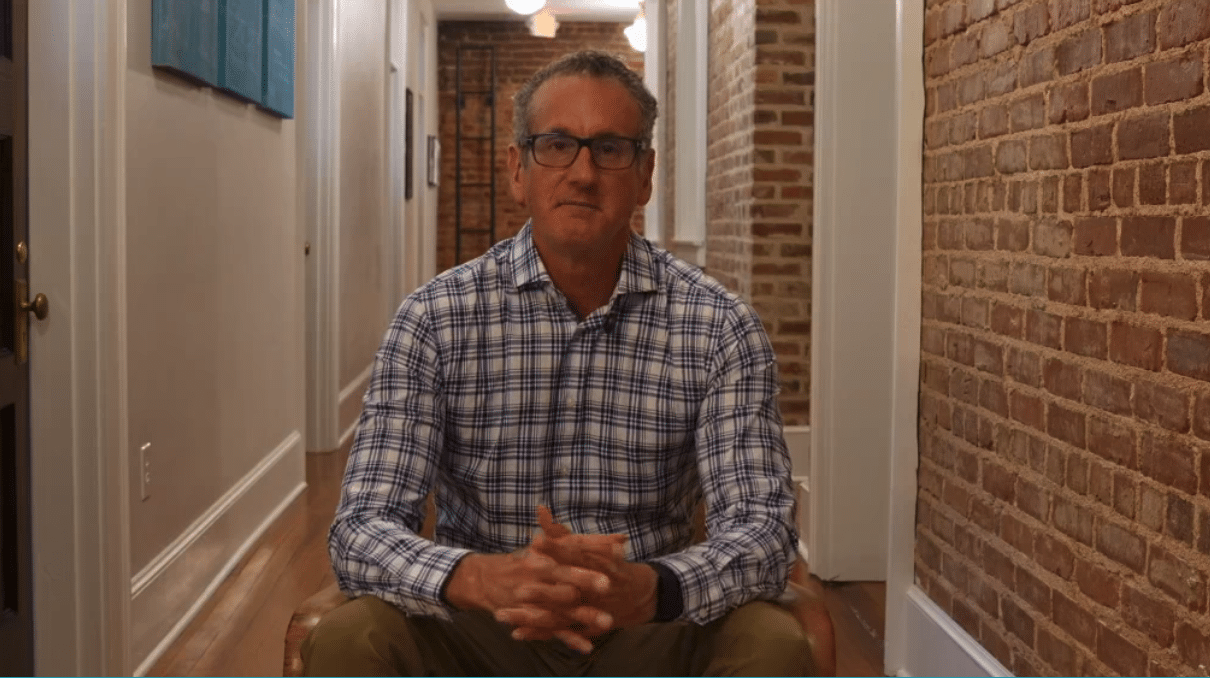
I am Scott Hastings. I broker mortgages out of Mooresville, North Carolina, on Lake Norman, and almost all of my work is with self-employed business owners and real estate investors whose tax returns do not reflect what their business actually does.
I am approved with three lenders running a no income program and a much longer list across the rest of the non-QM shelf. If your state is on the wrong list above, I will tell you in the first conversation rather than the third week.
No. Pennsylvania is one of six places where this loan is not available, along with Maryland, Maine, Nevada, Washington and Washington, D.C. Those states did not adopt the CDFI exemption to the ability-to-repay rule, so a lender relying on that exemption would be compliant federally and non-compliant under state law. Other non-QM programs, including bank statement and 1099 loans, are available in Pennsylvania because they document income and comply with ability to repay the ordinary way.
Because ability to repay exists at both the federal and state level. The federal rule includes an exemption for lenders certified as Community Development Financial Institutions. A handful of states wrote their own ability-to-repay requirement without that exemption, so the federal carve-out does not reach the state rule. Lenders respond by not lending in those states at all.
Yes. It rests on a specific federal exemption for CDFI-certified lenders, which the U.S. Treasury grants to institutions chartered to serve borrowers the conventional system underserves. The loan is fully underwritten and fully documented. Income is the only thing not verified, and the lender still requires a signed IRS Form 4506-C, a full appraisal, a fraud report and clean housing history.
Yes, with a practical floor of $300,000 on the loan amount. North Carolina applies a points-and-fees test that limits total charges as a percentage of the loan. Below roughly $300,000 the fixed cost of originating a manually underwritten loan pushes the file against that cap, so most lenders in this space will not go smaller. For a loan under that amount, a bank statement program is usually the better route.
The property. If you live in a state where this loan is unavailable but you are buying somewhere it is available, the loan works. The reverse is also true, so a borrower in an eligible state buying in Maryland, Nevada or Pennsylvania cannot use this program for that purchase.
Every other program on the non-QM shelf. Bank statement loans use twelve or twenty-four months of deposits. 1099 loans use your 1099 total with an expense factor. P&L loans use a profit and loss statement. Asset-based qualifying converts liquid assets into a qualifying figure. DSCR loans qualify an investment property on its rent. All of those document income, so none of them run into the state problem described here.
You can verify any mortgage broker or lender, including me, at the NMLS Consumer Access database. The federal ability-to-repay rule is explained by the CFPB, and CDFI certification is administered by the U.S. Treasury CDFI Fund.
Find out in one text whether your state works
Send me two things: the state you are buying in and roughly the loan amount. That is enough for me to tell you whether this program is available where you are, which of the three lenders fits, and whether a different program would actually serve you better.
No application. No documents. Nothing that touches your credit. If the answer is no, I will tell you that and point you at what does work.
Text me: 704-890-7168Or call the same number
Scott Hastings, NMLS #926762. Mortgages by Scott, a division of Arbor Financial Group. 121 N Main St Ste 202, Mooresville NC 28115. Equal Housing Opportunity. State availability, minimum loan amounts and program guidelines are set by individual lenders and by state law, and both change without notice. This page is general information current as of September 2026, not a commitment to lend or an offer of credit, and no rate, term or approval is promised. Message and data rates may apply.